
AI-enabled fundoscopy · Made for Africa
The answer is often in the eyes.
AEyeCARE puts specialist-level retinal screening in the hands of nurses, technicians and community health workers. A photo of the eye, read by AI in under a minute, at the bedside, with no internet needed.
The problem
A child in a coma. Is it malaria, or something else?
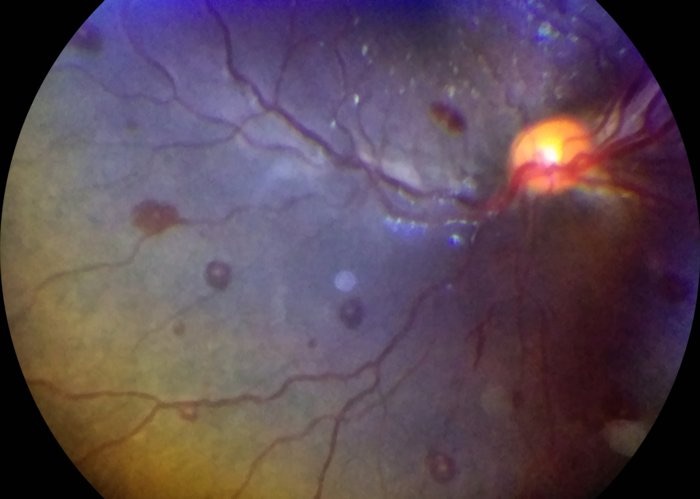
Cerebral malaria is the deadliest form of malaria, and it is easy to get wrong. In a landmark autopsy study, about 1 in 4 children diagnosed with cerebral malaria had died of something else, such as meningitis or sepsis, that might have been treated.
The retina is wired to the brain. When malaria damages the brain's small blood vessels, it leaves the same marks in the eye, and they can be seen. The World Health Organization notes that a missing eye examination is one reason cerebral malaria is misdiagnosed.
But Nigeria has fewer than 1,000 eye specialists for more than 200 million people. So the eye is almost never examined.
Our product
ASPIRE™
Autodetection Software for Plasmodium Infection in Retinal Exams
- 01
Photograph the eye
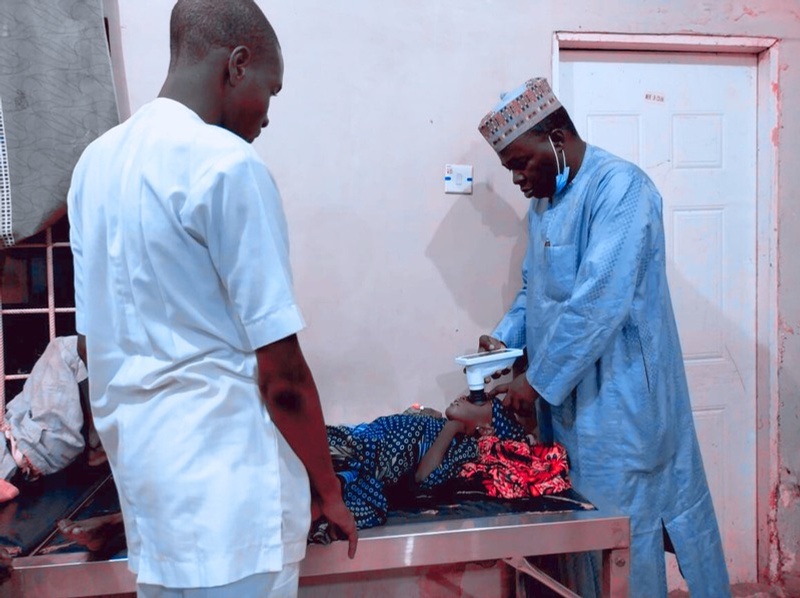
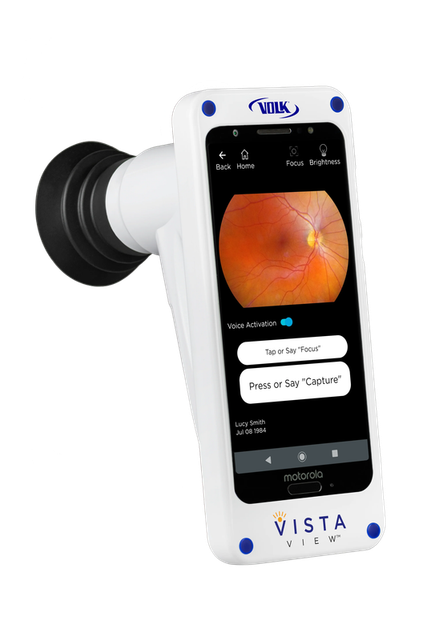
A handheld retinal camera and an Android phone. One short training session is enough for nurses and technicians.
- 02
AI reads the image on the device
Trained on about 100,000 retinal images. It runs offline, so it works on the ward, in the clinic and in the community.
- 03
A result in under a minute
Retinopathy detected, or not detected. A positive result supports a diagnosis of cerebral malaria. A negative one says: keep treating, and keep looking for other causes.
ASPIRE is a guide, not a judge. It supports the health worker's decision; it does not replace clinical judgement.
The evidence
A promise is not proof. So we tested it.
A prospective, multicentre trial from 2022 to 2024 compared ASPIRE with a panel of three eye specialists, in children in a coma.
Both pre-set goals were met. Trial registration NCT06915285. Next, we have to show that faster, better diagnosis changes outcomes, and that study is our priority.
Our focus
One picture of the eye. Many diseases.
The retina shows what is happening in the body's small blood vessels. We are building screening for the conditions that cost African lives and sight.
- Validated · pilots in Nigeria
Malarial retinopathy
A critical marker of cerebral malaria. Fast bedside screening in children's emergency units.
- Validation under way
Diabetic retinopathy
A major cause of blindness in diabetes. Clinical validation is running across 16 centres in Nigeria.
- Study launching
Hypertensive retinopathy
About 1 in 3 Nigerian adults has high blood pressure. The retina can show its damage early.
- Exploratory
Pregnancy and pre-eclampsia
Early warning of hypertensive disorders of pregnancy, to protect mothers and babies.
Our story
From a research ward in Malawi to hospitals in Nigeria
ASPIRE began with research in Malawi in 2016, funded by the US National Institutes of Health, where clinical data collection started. It then grew across several African countries into a tested product.
AEyeCARE was formed to take it to the health workers who need it, starting in Nigeria.
Co-founder & CEO
Dr Folajimi Adebowale
Physician, health strategist and documentary filmmaker. MBBS, MBA.
Co-founder
Dr Vinayak Joshi
Biomedical scientist, PhD.
Get in touch
Put screening where the patients are.
Hospitals, states, funders and partners: we would like to hear from you.